This farm has been No-Tilled over 10 years.
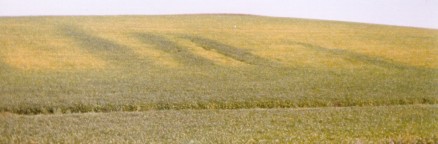
Below you see dark areas of soybeans (up & down) where dirt was hauled from the
bottom into the sidehill about 10 years ago. This image was taken in the fall of 1997
(soybeans) and shows dramatically the late fall stages of the maturing beans where
the topsoil was hauled (which are the dark green areas).
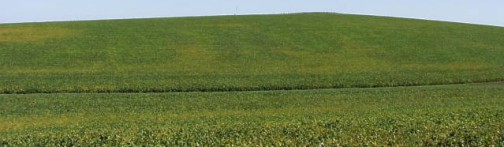
Below is the same soybean field as above during the 2000 drought season.
This picture was taken on September 15.
Around 11 inches of rain fell from April 1st to September 15 with 1 inch falling in August.
This picture below shows soybeans from the above sidehill. The bean stalk on the left
was the height of the beans where no topsoil was hauled and the bean stalk on the right
was the height of the beans where topsoil was hauled 10 years ago.
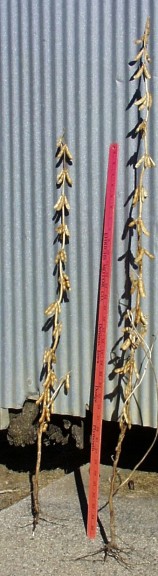 The beans growing on the areas where topsoil was hauled averaged 58 pods and the beans growing right next to these areas where topsoil was NOT hauled averaged 48 pods.
We not only are losing yield production from erosion but also the creation of Organic Matter which is part of the soil creation process. In all cases, even if the yield isn't higher in these areas where topsoil was hauled the crop is much taller. These areas are where OM is low and residue is needed to hold soil and as seen on the bean pictures here & corn pictures linked below there is more plant residue created.
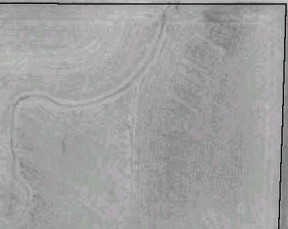
This image shows a 1990 aerial Ortho Image of this same area of the farm. You can see
the areas in the sidehill (middle to upper right side) that had deep ruts created and is
where the soil was hauled about 10 years ago.
During the spring of 2000 we saw similar situations on a corn field.
This link shows a similar dramatic result from hauling soil on another farm that was corn in 2000.
2000 Fall Dirt work